

AI-assisted development has made writing code faster than ever. Features that used to take weeks to build now ship in days. Backlogs actually move. But speed has a way of exposing cracks you didn't know were there, and most of them have to do with quality.
The thing is, "quality" isn't one thing. It's at least three, and they don't all move at the same pace.
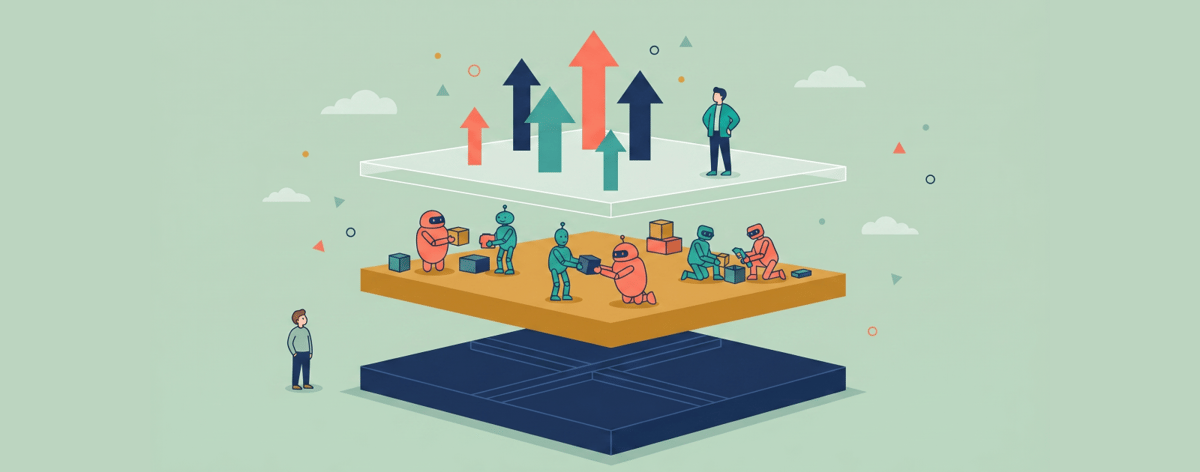
All three layers compound. Functional quality is the floor. Structural quality is what lets you keep moving. Outcome quality is what makes the work matter.
Want to learn more about quality?
Our work with Specially Designed Education Services (SDES) is a great example of outcome quality shaping every decision from the start. SDES had a successful paper-based Functional Academics program for Special Education teachers and students. The obvious move was to digitize something that works well but doesn't scale well. But a direct 1:1 translation of paper worksheets into screens would have missed the mark entirely.
Special ed classrooms are dynamic, unpredictable environments. Teachers need flexibility, not rigid software that forces them into a workflow designed for a screen instead of a student. If we had just "put the paper on the computer," teachers would have gone right back to pen and paper, the most flexible tool available.
Instead, we spent time deeply understanding the goals and context of use: what teachers were actually doing, what interrupted them, what flexibility they needed, and what "good enough" looked like in a real classroom. That understanding shaped the product in ways a requirements doc never could have.
The result is a platform that teachers actually want to use, not because it replaces paper, but because it made their work genuinely better.
Read the case study: EdTech for Special Ed
Speaking of quality, we want to give a shout-out to our long-time partners at QA Camp. They bring a depth and breadth of QA experience to any project that's hard to match, and we've worked with them for years, including on the SDES project described above. If you need testing expertise on your team, we can't recommend them highly enough.
If you're thinking about how to protect quality as your team moves faster, or how to make sure you're building toward the right outcomes, we'd love to talk about how Uptech Studio can help.
Claude Ciocan
Partner, Uptech Studio
www.uptechstudio.com

